
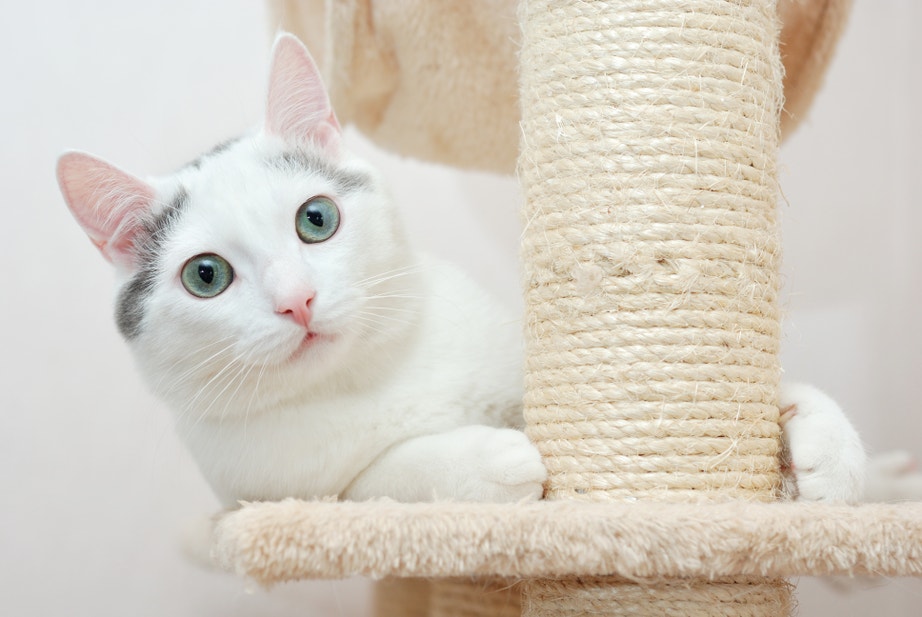
CAT PLAY AREA ESSENTIALS: DESIGN AND SETUP
Your cat is an adorable and awesome creature and as their pet parent, you need to meet their needs to keep them happy and healthy.
How do you look after your feline friend? A cat play area of course! Cats need a safe space that mentally and physically stimulates them. It needs to be designed and set up to lean into their natural behaviors.
They’re built to scratch, stretch, relax, and your agile buddy needs tunnels and toys to feed their exploration.
From cat trees to catios and scratching posts and custom outdoor playgrounds, we’ll cover the whole spectrum of indoor and outdoor cat play areas whilst highlighting the classic considerations, like space, safety and your cat’s preferences.
A cat play area can tick all the boxes when we consider how to entertain cats.
How to entertain a cat with a dedicated play area
A playground for cats is the ideal structure to entertain your pet. Offering mental and physical stimulation, they’re designed to adhere to the natural behaviours of your favourite feline. Think scratching, climbing, jumping, and the classic, relaxing.
And they’re fun. Full stop. They create a safe space your cat can engage with and explore, keeping them healthy in the process.
If you want to know how to entertain a cat, cat playgrounds are your varied and vibrant answer. Toys like pom-poms and scratching posts offer ample stimuli whilst also focusing your feline’s clawing to a specifically designed area, rather than your household furniture (who wants scratched up cupboards anyway?).
Tunnels and towers encourage climbing and crawling, tapping into their wild side, with platforms, hammocks, and plush baskets allowing relaxation from a comfortable vantage point.
Cat play areas are crucial for your cat’s happiness and development, but should you choose an outdoor or indoor cat play area?
Outdoor playground for cats: Creating an engaging environment
When can cats go outside? If your cat is constantly bored, pining at a door, or has a high-energy drive, they may be ready for a cat play area in your garden.
The good news? There are engaging and entertaining playgrounds for cats that cater for outdoor play, whilst keeping them safe and secure. Known as catios.
Catios are enclosed spaces designed to offer your cat space to roam outside and are outstanding when you want to know how to entertain cats outdoors. They include ramps, tunnels, climbing poles, cat trees, scratching posts, perches, and natural elements like cat plants and branches.
If setting one up in your garden, stick to these guidelines.
- Tall cat-proof fencing, which is durable and protected against the elements
- Create a safe hiding spot for the cat to retreat to safety
- Avoid toxic plants or chemicals in your garden
- Accommodate with sunny and shaded spots
- Situate near an access point to your house
- Create separate water and toilet spaces
- Keep it clean to prevent parasites
- Make it comfortable and playful
Be sure to check on your cat in the initial stages of their outdoor cat play area, too. Doing this makes sure they’re comfortable with their enclosure and keeps a steady eye on predators or playground damage.
Next are indoor cat play areas. However, if you want to know the differences between letting your cat outside vs keeping them inside, click the link.
Indoor cat play area: Safe and fun solutions
Indoor cat play areas provide plush settings that keep your feline friend active and happy, and this is how to entertain cats when using one.
To start, you follow these simple steps to ensure your indoor cat play area is placed properly, with a variety of play stations to keep your cat interested.
- The Higher. The better. Installed vertical shelves and cat trees are your go-to here, with platforms, perches, tunnels, and ramps perfect for satisfying natural feline rhythms of jumping, climbing and surveying from above.
- Place in a spacious room next to a window or door. This allows more room for your cat to play as well as being able to observe the outside world.
- Keep it cosy with hidden cubby holes, caves, and cat condos in different rooms and at varied heights. Ideal spots for relaxation.
- Make it fun. And playful. Toys like pom-pom balls, stalking toys, and dangling playthings fulfil primal urges. Please note, any dangling strings or toys must be short in order to avoid any risk of strangulation.
- Encourage exploration with tunnels and hidey holes, scratching posts across multiple tiers, as well as catwalks and skywalks.
- Secure all parts thoroughly to prevent damage or injury.
Entertaining your cat is so important. Why? Cats need regular stimulation, both mental and physical, to nourish their natural instincts. And when it comes to how to entertain a cat, our article explains further on how to stimulate your indoor cat.
Video Demonstrations: Creating a cat activity centre
Additional considerations for the right cat play area
Whether you’re considering an indoor cat play area or one for your garden, you should contemplate a few factors before you begin to ensure maximum enjoyment and satisfaction from your feline friend.
The cat’s age, size and activity level are your deciding details when answering the question of how to entertain a cat.
Kittens and younger cats are extremely energetic and mobile, so they’ll need more space and toys to burn off that energy. Think play areas with plenty of space to jump, scratch, and climb. But be wary not to include platforms or perches that are too high, as kittens are known to fall whilst they’re finding their feet.
Adult cats will need more resting spots, climbing options, and scratching posts. So your cat play area design should include spaced-out shelves and platforms. Is yours an older feline? Then, wider ramps, cubby holes to relax, and a generally lower condo or cat tree will meet their energy and agility needs.
Another trait is your feline’s frame. Smaller cats can use more petite platforms and ramps, with a generally lighter structure capable of satisfying their size and weight.
However, bigger cats need more space and a sturdier build. Think bulkier perches and wider platforms, with obstacles comfortably spaced apart so they can move around freely.
One more thing, remember to include plenty of places to rest and where they can dart away to hide.
Cats need to feel comfortable in a space that meets their natural needs, so hammocks and caves are ideal for resting. But dart boxes offer a space your cat can retreat to when it’s startled.
Make resting spots easily accessible (especially if your cat is older) and darting boxes private but in high-traffic areas.
Setting up safe play structures for cats
Ok, so you’ve picked the right amount of perches and cushioned all your platforms, but your playgrounds for cats still need to be safe.
How do you entertain cats without compromising safety? We’ve got you covered.
For your cat to feel safe, vertical space is key. Felines feel confident and comfortable in their surroundings when perched high as it fulfils their natural needs of surveying the ground below. Include a multi-level design with plenty of obstacles and relaxation spots, too.
Use smooth and sturdy materials like wood that doesn’t splinter or plastic that doesn’t warp. Keep small parts to a minimum as they could be ingested, and cut down on sharp edges.
If in an outdoor space, use a catio to screen your cat from predators or escape, whilst also avoiding toxic plants. Supply separate water and litter spaces and keep them out of direct sunlight.
When constructing, use pet-safe adhesives or fixing and remember to tighten all screws, bolts and joints. Avoid gaps or collapsible parts that might trap your cat and test each part of your cat's play area by gently pushing or shaking to ascertain sturdiness.
Plus, clean regularly. But, first things first, you need to choose the right location…
Choosing the right location for cat play areas
Getting the location spot on is how you make your cat feel epic. Get it wrong, and they’ll be disinterested in all your hard work.
Consider these factors when selecting your cat's play area location.
- Family friends! Cats love being close to us humans. And your cat will be no different. So, place your playground where your family regularly gathers.
- Natural needs. Your feline gets a buzz from watching the outside world, even if they don’t want to be there. Place perches and platforms and cozy resting spots next to windows or doors for their light and observation fix.
- Fans of the vertical. Natural behaviours of jumping and climbing need high spaces, pick a room which allows playgrounds with height.
- Variety is the spice of the cat. Include different ramps and relaxation pods, varied perches, platforms, scratching posts and toys to keep them stimulated and engaged.
- Keep the noise down! Although cats want to be around you, they don’t like super noisy spots.
Maintaining and cleaning cat play areas
For ultimate longevity and enjoyment of your cat’s playground, for them at least, you need to keep them clean.
Remove cat hair and dirt with a brush or vacuum cleaner and dab at stains, like urine and litter marks, with pet-safe disinfectants. If the surface is wood, plastic, or metal, use a damp towel or microfibre cloth to wipe away at built-up debris or dirt.
Some fabrics can be removed, like hammock covers and cushions, so use a pet-friendly detergent and washing machine to thoroughly wash them.
Outdoor spaces require regular sweeping with pet-free disinfectant on all parts. Leave the solution in the space for a couple of hours at least before letting your cat back in. If you have wooden parts, treat them effectively for outdoor use.
To make sure your play area doesn’t get too dirty, we recommend a weekly cleaning schedule.