
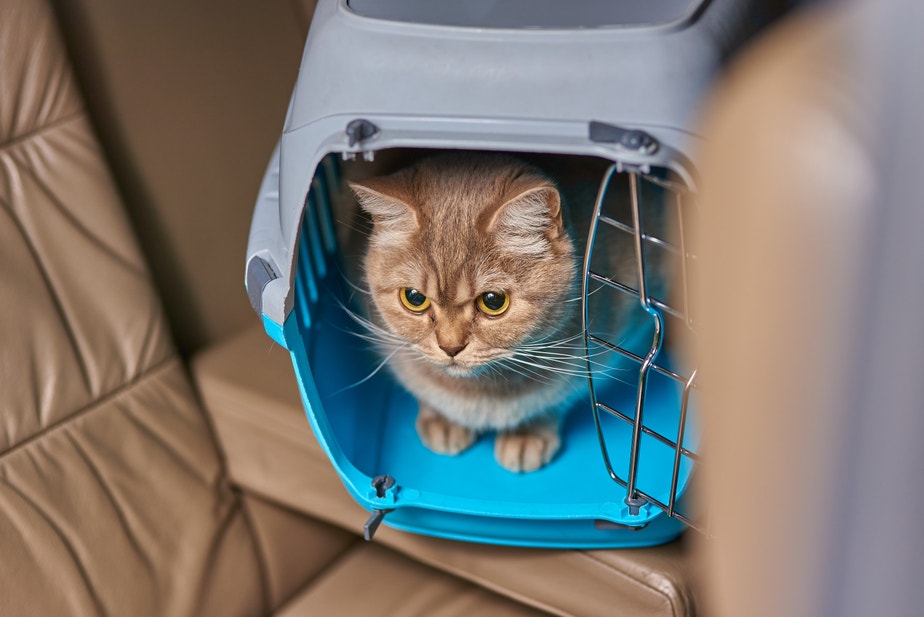
Cats in Cars: 8 Tips for Cat Travel
Is it cruel to travel with a cat? It depends on the individual cat and the circumstances within which they travel. Travelling with your cat can be a wonderful experience, you can make lasting memories by seeing different parts of your city, country, or even the world with your feline companion. However, travelling for them isn’t the same as for us. We often enjoy our routines being disrupted, experiencing new smells and sounds, and the journey to the destination. Cats generally don’t enjoy travel and will need a lot of help to reduce the stress it causes them.
Doing as much forward planning as possible around adapting their routines and managing their environments can make a huge positive impact on your adventure with your furry friend. The more you implement these plans, the easier having your cat in a car will become for both of you. Familiarity lowers anxiety in pets. Throughout the process, try to always give them positive reinforcement, as this will speed up the adaptation process, which means more fun adventures for the both of you.
However, we will highlight that most cats would find regular travel stressful, so careful consideration must be taken into account to ensure the type of travelling you’re planning to do is suitable for your cat. If you’re someone who wants to travel regularly with your pet, a dog would be a much more suitable option. In our guide, we’ll give you the tools to ensure your pet can travel with you in your car, anywhere.
Why do animals get carsick?
Cats seem to get motion sick for the same reasons we do. It’s the feeling when there’s a mismatch between what we’re seeing and what we can sense in our inner ear. (The inner ear is the innermost part of our ear - a highly sensitive area responsible for hearing and balance).
Carsickness is more common in younger cats, just as it’s more common in human children. This could be because their inner ear structure hasn’t fully developed yet. It could also be because they don’t have much travelling experience. It can take a little while for them to adapt to experiencing signals in their inner ears and eyes that don’t match.
Another reason why cats experience car sickness can be emotional. If they associate the car with something they don’t like, for example, the vet, they might get anxious, and this manifests as carsickness.
8 tips for travelling with a cat
Here are 8 tips that will make cat travel an enjoyable experience for you and your feline friend.
1. Prepare your cat to travel
As we mentioned before, familiarity lowers anxiety in pets, so when travelling with a cat, the best thing you can do for them is get them used to travelling with you as soon as possible. It’s important to show your cat that a trip in the car can lead to good things. Which will ease their anxiety every time you travel with them. Also, keeping as close as you can to their original feeding and bathroom schedules whilst driving with them is important too. This will help lower their anxiety, as there is still some element of familiarity around them in an unfamiliar environment.
2. Choose the right cat carrier
The cat carrier is the best way to travel with a cat in a car. It’s your cat’s mobile home away from home, so you want it to be as comfortable for them as possible. There is a wide range of cat carriers available both online and in physical pet stores, so before you purchase one, be sure to carry out extensive research on sizing, materials, and safety features to get the one that best suits your cat’s needs. Use their bed or favourite resting place at home as a reference point.
Once you’ve got the one you want, it’s vital that the cat carrier is secured wherever in your car you decide to place it, e.g. in your footwell.
3. Provide comfort and distractions
Once your cat is safely in the carrier, you can make them more comfortable by playing soft, soothing music such as jazz or classical music. This can help to reduce drone out unfamiliar background noise whilst your cat is in your car. If possible, try to specifically play music that they’re already familiar with when they’re at home, as this is likely to be even more effective at soothing them. You can also leave their favourite toy, and/or blanket in their carrier for them to play with for added comfort. If there are a lot of changes in light conditions during the journey, covering their carrier with a blanket can help to reduce any visually related stress.
4. Maintain optimal car environment
There are a few ways you can make having the experience of having a cat in a car a calming experience for the cat. Firstly, driving as smoothly as possible can make a huge difference. We mentioned how motion sickness can negatively affect your cat earlier, so being as consistent as you can with the car’s motion will help to reduce this effect. Slow, early braking, gradual acceleration, and turning can help to reduce motion sickness.
We also mentioned playing music earlier; however, it’s important that this music isn’t too loud as this could make your cat stressed. Controlling the temperature is also something that can help. Cats generally prefer warmer temperatures (between 86 F and 100 F or 30 C and 38 C) than we do. Try to make your car as close to this range as possible, without also making it uncomfortable for you and any other humans in the vehicle.
5. Take breaks
Understanding cat behaviour can be a massive help in knowing when it’s time to take a break from driving. If your cat is stressed, they’re likely to:
- Tuck their tail between their legs
- Over groom themselves by excessively licking
- Stiffen their posture
- Widen their eyes
- Ears pricked to one side
- Droop their whiskers
- An increase in meowing/crying
Once you start to notice these behaviours, you can incorporate fun breaks to ease their stress. Try to do it at regular intervals, similar to feeding times, so that they become accustomed to having fun whilst travelling.
One way you can join in their playtime is by using fishing rod toys to mimic a ‘hunt and kill scenario’, make sure you allow them to catch their ‘prey’ so they don’t get frustrated. However, please ensure that you never leave your cat alone with toys that have strings, as they pose a strangulation risk.
Making feeding time more challenging by using puzzle feeders putting food into plastic containers with holes cut out of them, so that your cat has to hit it to get the food, is another way to stimulate their minds, and also help them to eat more slowly.
If you have the right type of harness, collar or lead leash, you can also take your cat for a short walk, providing your cat is used to walking on a harness with a collar and lead, and you can find a quiet, safe space to do so. However, it’s important to note that most cats dislike being walked on a collar and lead, so you might find it difficult to get your cat to comply. If you’re confident that attempting this won’t stress out your cat, we’ve written a guide on how to do so.
6. Handle stress and anxiety
A key part of handling their stress and anxiety is maintaining a calm demeanour as much as possible. Cats can sense stress hormones in humans, often before we even realise we’re stressed. They can sometimes mirror these responses, so if you’re stressed, they’re more likely to be as well, and if you’re calm, they’re more likely to be so too. This is arguably the foundation of how to travel with your cat, as your calmness can help balance the anxiety they feel of motion, routine disruption, and unfamiliar environments.
Using calming pheromones is another tool that can be effective at improving your cat’s mood. Spraying your car and the cat carrier before your cat enters is a good way to aid the transition from familiar territory to unfamiliar territory.
7. Medication
There are numerous medications you can use to mitigate the effects of car sickness in cats. Speak to your veterinarian to get trusted information that suits your individual needs. Other nonmedical options include bringing the smell of home, or you, along for the ride, too. You can do this by bringing an item from home such as a t-shirt, hat or a blanket, which will help your cat to feel more comfortable as they have a familiar link to their safe place when navigating unfamiliar territories. Also, only if this isn’t too stressful for your cat, either reducing the amount of food they have in the lead up to the trip or withholding food up to 8 hours before travel can help. Travelling on an empty stomach can reduce nausea and reduce the need for regular toilet breaks, which can slow down your trip.
8. Be prepared for emergencies
Not all trips go to plan, and unfortunately, accidents can happen when you’re making new memories with your furry friend. So it’s crucial to be prepared for as many bad scenarios as possible so that even in stressful situations, they’re not stressed out.
Cat travel means you also need to bring a first aid kit for pets, this will be a vital part of any contingency plan. Whilst you’re on your journey, particularly on longer drives, be sure to have a detailed list of vets that are closest to you and what they might specialise in. Before you set off, speak to all of them to ask any questions you might have and get some reassurance that they’ll be there to help if you need them.
Practising first aid techniques for pets before you leave will give you more confidence of being able to act quickly and effectively if something goes wrong.
Concluding tips for carsick prevention
As you can see, travelling with a cat doesn’t have to mean car sickness and anxiety. You can make cat travel a great experience for both of you every time, by remembering to do the following:
- Get your cat used to riding in the car with you as soon as possible.
- Prepare for the worst-case scenario.
- Make the car environment as relaxing as possible for your cat.
- Create positive associations with car travel.
- Remember to get them to have some fun along the way by joining in with their play sessions
- Drive smoothly
- Use calming pheromones if needed
- Be patient, getting your cat used to travelling in the car with you is a long term project, but it's always extremely rewarding once you start to see progress.
- Cats feed off your emotional state, the calmer you are, the calmer they're likely to be.
- Save this guide to help you remember how to travel with a cat.
- Enjoy the process, having a positive outlook can work wonders.